Local Guide
The Grand Traverse Commons
Building 50 is home to The Observatory. Here's what makes the Commons more than just our address.
What the Commons Is
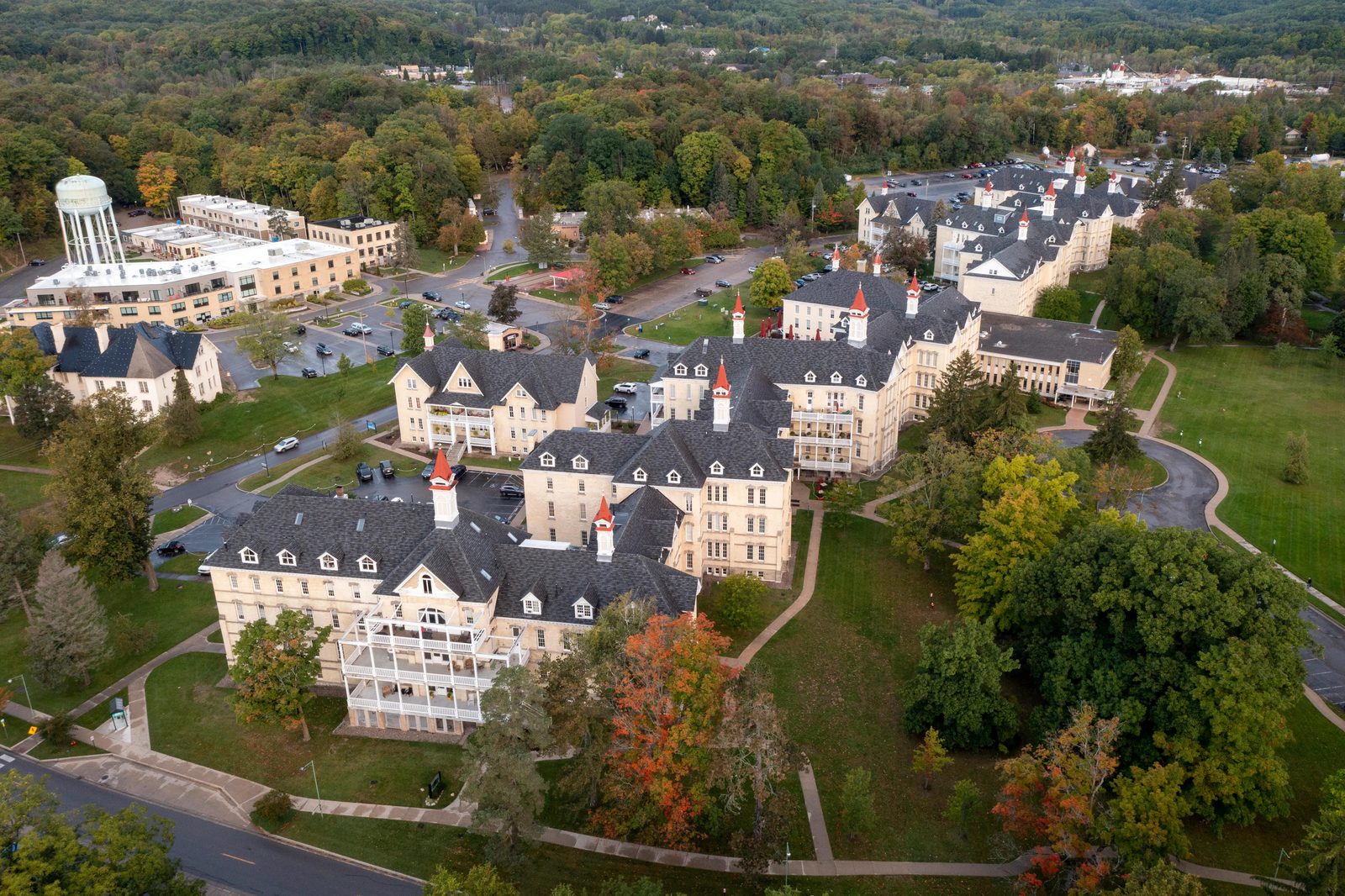
The Grand Traverse Commons is a hillside campus of yellow-brick Victorian-Italianate buildings west of downtown Traverse City. The architecture is the first thing that hits you. That distinctive buff tone came from the Markham brickyard just up the road in Greilickville, laid in load-bearing walls with corridors wide enough to drive a cart through and huge sash windows designed to flood the wards with light. It's a scale and a material honesty that doesn't get built anymore. The cost alone would stop most modern projects before ground broke. Scattered beyond the main spires, a handful of historic barns still stand from the original working farm, a reminder that this was a self-sufficient place long before it was a destination.
Walking the halls of Building 50, you feel the building carrying its own weight. The spaces are sized for people, not for efficiency, and the proportions still work more than a century later.
The History, Clarified
When people hear "former asylum" they picture the wrong thing: mistreatment, horror-film aesthetics, suffering. That was not this place. The Northern Michigan Asylum opened in 1885, designed by architect Gordon W. Lloyd on the Kirkbride plan, a philosophy that treated fresh air, natural light, and meaningful work as essential to care. Residents farmed, cooked, wove, and gardened on the grounds. The dairy herd even produced a world-champion milk cow, Traverse Colantha Walker, whose grave is still on the property. The community was self-sustaining and the people who lived here were respected.
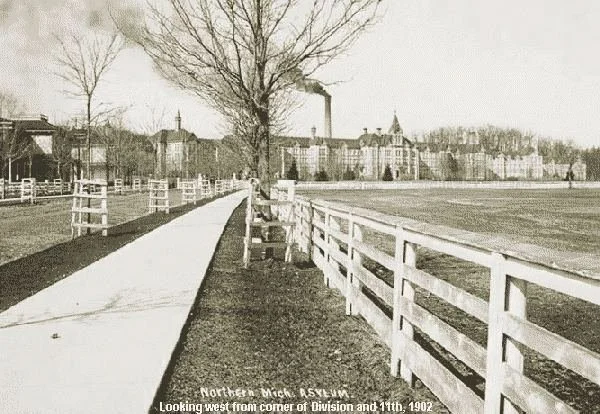
The state closed the facility in 1989 and the buildings sat empty for years. What came next is one of the largest adaptive-reuse projects in the country. The Minervini Group began renovating Building 50 in 2000 and reopened the campus in 2002 as The Village at Grand Traverse Commons, converting the historic structures into condominiums, offices, restaurants, and shops. The work is ongoing, a decades-long effort that has brought the place back to life without erasing what it was.
A Day on the Commons
The mornings are what I look forward to. The spires of Building 50 cast long shadows across the lawn, Higher Grounds is roasting coffee a short walk away, and the smell carries. It's crisp and quiet, and the first people of the day drift in for a cup.
Evenings have their own pace. People come out for dinner, a glass of wine, the pavilion. Live music runs through the warm months. Lights come on in the hallways of Building 50 and the old brick takes on a softer color. If you catch both ends of a day here, you'll understand why I live here.
Host's take
One of Michigan's heritage gems brought back to life. Beauty, nature, food, community, all tucked into a northern Michigan forest, right next to downtown.
Eat, Drink, Shop
There's more good food and drink in one walk than most visitors expect. The usual suspects get the press, but you can spend a long weekend here without repeating a restaurant or a cup of coffee.
Trattoria Stella is the anchor. Locally sourced menus, staff who know the wine list and the cocktail program (heavy on local distillers), and a vaulted brick dining room that feels substantial in a way most restaurants can't manufacture. Reservations are essential on weekends. The morning community gathers at Higher Grounds, where the coffee is sustainably sourced and roasted on site, and the mission has weight beyond the cup. For breakfast and lunch, locals route through Red Spire, a place with the upbeat energy of routine rather than destination.
The rest fills in around those three. Pepenero and Salt 2 Sugar round out the restaurant options. Left Foot Charley pours their own wines and ciders in the building, and Earthen Ales brews small-batch beer in the tap room. The shop mix in Building 50's hallways shifts over time but stays consistent in character: Landmark Books, Sweet Asylum, The Refillery TC, and the rest are independent and thoughtful.
Planning a trip?
The Observatory is our loft in the Grand Traverse Commons, a restored 1885 building with restaurants, a winery, and trails on-site.
Check Availability →The Grounds and Trails
The campus sits on over a hundred acres of old forest on a wooded hillside. Some of the hardwoods here have been standing a long time, and the trail network runs through them, connecting the buildings to the surrounding neighborhoods and on into the larger regional trail system. Creeks, a few artesian wells, bluffs that open up views over the city and Grand Traverse Bay. It's real forest, not a park-ified version of it.
Fall is where this land shows off. The old maples, oaks, and beeches turn all at once, and from the balcony at The Observatory the color sits at eye level. You can lose an afternoon just watching the light move across the hillside.
Community and Events
The Commons works as a neighborhood because people actually use it. Yoga and wellness classes run through the building, restaurants and cafes double as meeting places, and events fill the calendar year-round. The farmers market is a weekly anchor in the warm months, and the community gardens on the grounds keep the place's agricultural roots alive season after season. The holiday market in December is worth a trip on its own. Live music runs at the pavilion through the summer, and smaller events (readings, tastings, gatherings) come and go based on who's organizing.
Getting There, Parking, When to Visit
Multiple entrances connect the Commons to the surrounding city grid, so there's no single "right" way in. Parking is free. It can be tight during busy lunch and dinner hours, but spots open up, and there are overflow lots if you need them. On a busy summer Saturday, give yourself five minutes of patience.
The Commons lives and breathes with the seasons. Summer is the big draw, and July through August can feel busy. Fall is the one I'd make a dedicated trip for. Winter is quieter, the restaurants and shops are open, and the building interiors have their own cold-weather appeal. Spring is shoulder season and a good time to come if you want the grounds mostly to yourself.